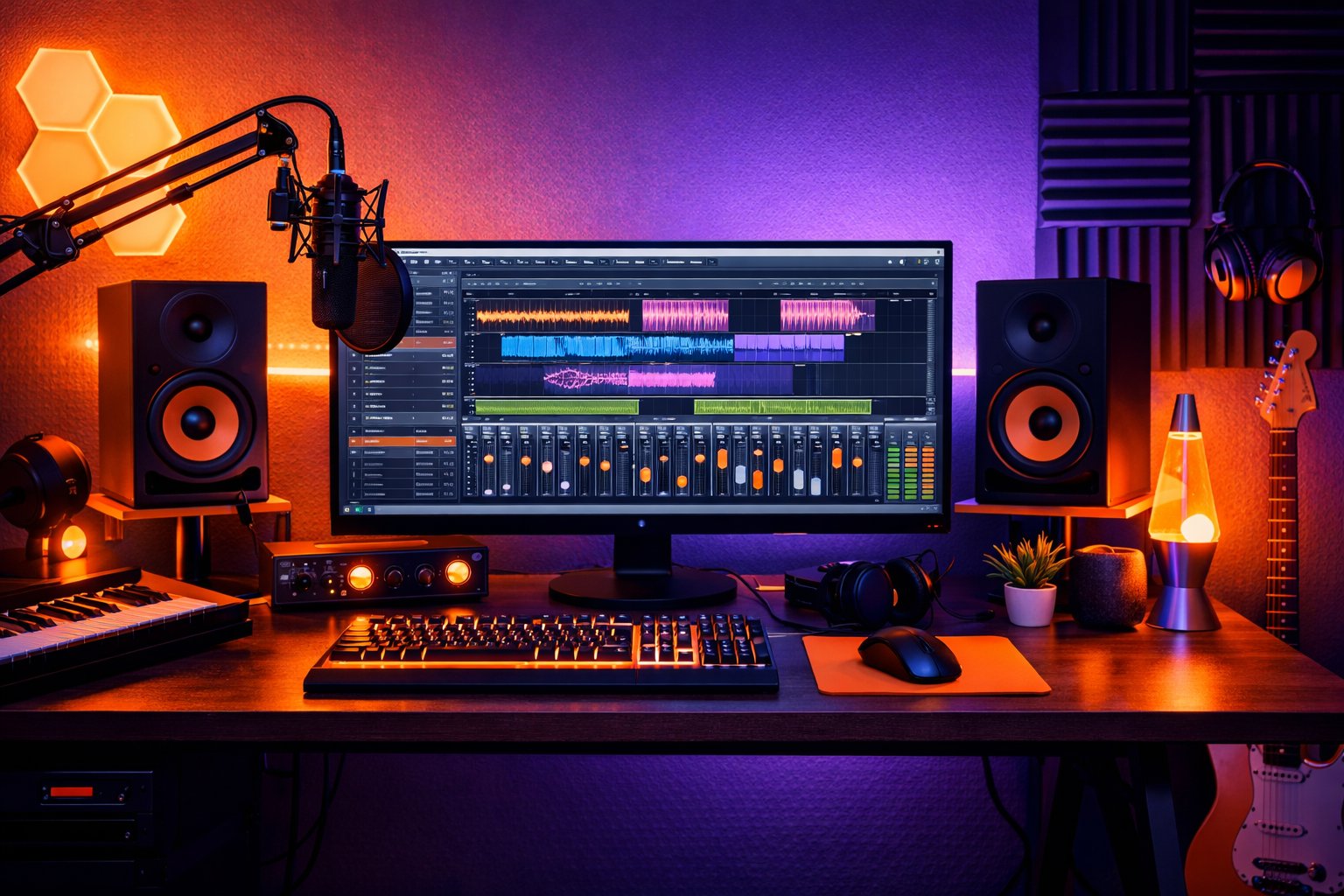
Understand generation, assistance, separation, mixing and mastering as different uses of AI—and where human decisions still determine the result.
Start with the real problem
“AI music” is an umbrella term. A text-to-song model, a stem separator and an intelligent equalizer solve different problems and create different rights, quality and provenance questions.
Principles that transfer between projects
- Identify which stage actually uses AI.
- Keep human creative decisions and source records.
- Evaluate outputs for artifacts and bias.
- Read current terms before commercial release.
These are decision frameworks, not fixed presets. Source quality, arrangement, performance and monitoring determine how far any process should go. Always compare at matched loudness and preserve an untouched version of the source.
Step-by-step workflow
- Define the creative purpose.
- Choose generation or assistance accordingly.
- Save prompts, versions and source files.
- Edit, arrange and post-produce deliberately.
- Verify rights and platform disclosure requirements.
How MixingMusic fits
MixingMusic can help balance user-supplied stems and master a finished mix. It does not replace source selection, permission, arrangement or critical listening. Export the cleanest lossless files available, keep a reference, and evaluate the result as one stage in a documented production workflow.
Common questions
Is all music made with AI fully AI-generated?
No. AI may assist one narrow task while the composition, performance and production remain human-authored.
Does MixingMusic generate songs?
MixingMusic focuses on post-production: balancing stems and mastering audio supplied by the user.
Related practical guides
Sources and further reading
Editorial note: This guide is educational, avoids universal settings and is reviewed when cited platform policies change.